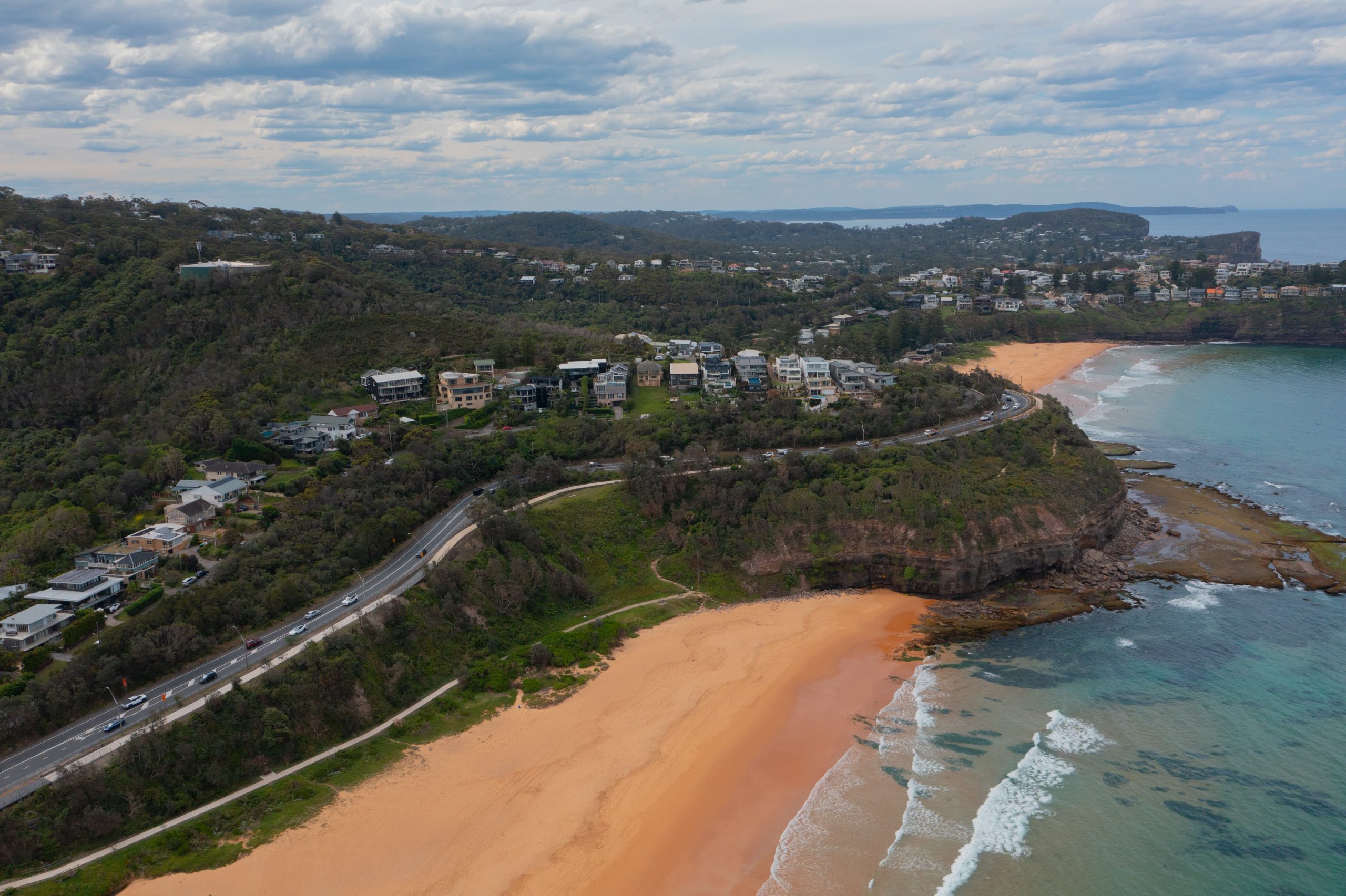
The bushfire that broke containment lines at Oxford Falls over the weekend felt like a warning bell ahead of bushfire season.
Thanks to the Hazards Near Me app (if you don’t have it, download it immediately), the NSW Fire Service could send residents timely alerts to let them know what was happening.
As the fire progressed from a hazard reduction exercise to an out-of-control situation where it was ‘Too Late To Leave’ for some residents, it was a timely reminder that fire moves fast and we need to be prepared.
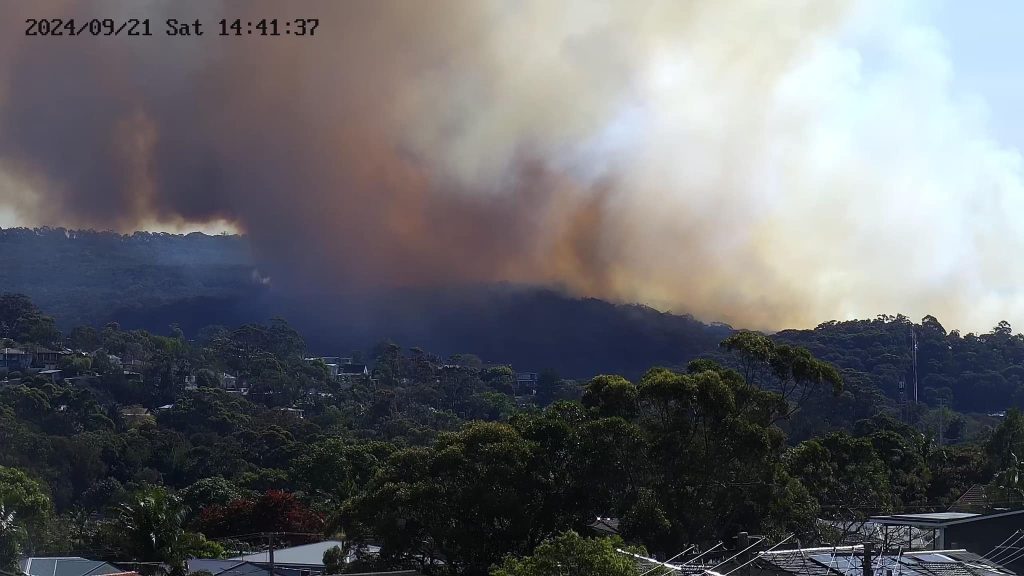
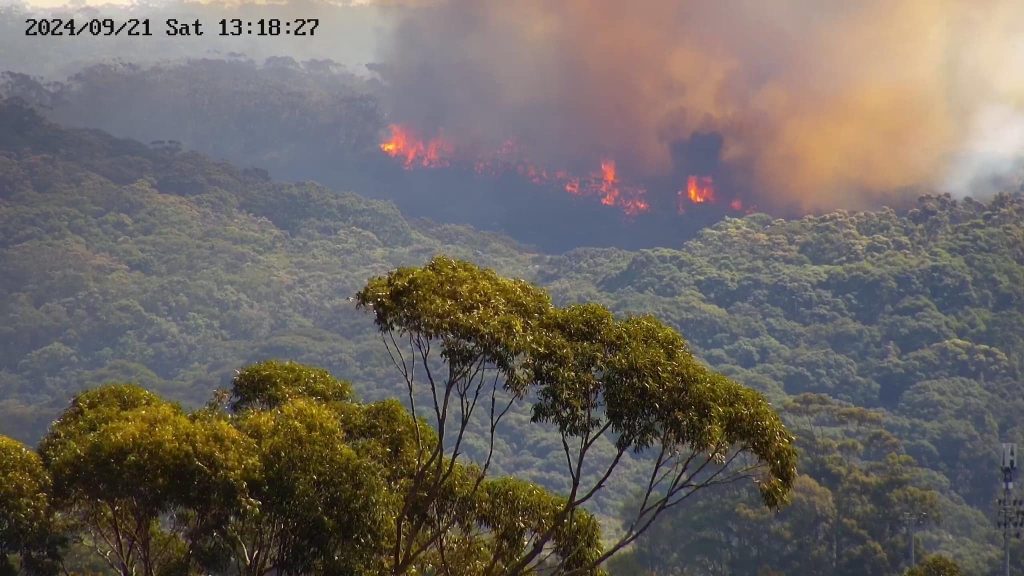
Images shared by Michael Gleeson in Northern Beaches Living Facebook group.
Ironically, it was ‘Get Ready Weekend’ on the 21 and 22 of September, where we are encouraged to meet with volunteer firies and talk about how to prepare our home and family for the coming season.
The Rural Fire Service have faced questions and received a lot of criticism about how it got so close to people’s homes. We’re sharing this message from the Northern Beaches Rural Fire District:
“We want to take a moment to sincerely acknowledge the concerns raised around the recent hazard reduction burn that unfortunately spread beyond the planned control lines. This area, which hasn’t been burnt since 1994, had high fuel loads that contributed to the unpredictable fire behaviour.
Despite our careful planning, a few embers escaped and led to a spread that no one wanted to see. Even today, under calmer conditions, our dedicated firefighters are still working to manage spot fires beyond the control lines.
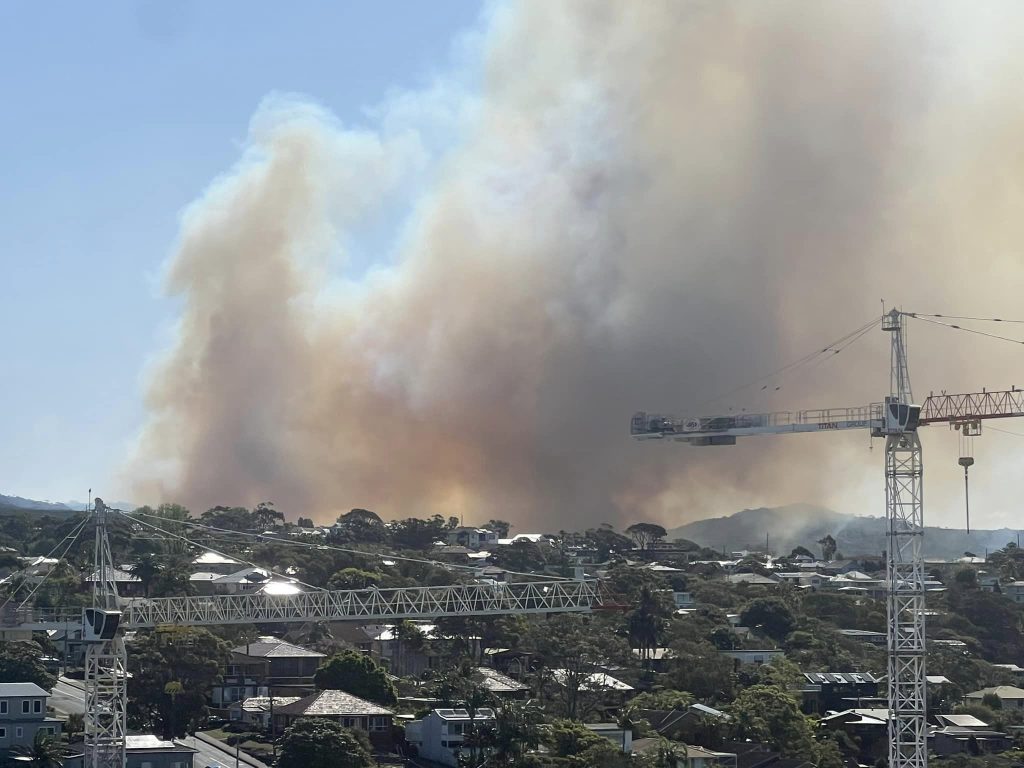
While the fire’s spread was disappointing, we are thankful that the 140ha area now has reduced fuel loads, with no loss or damage to properties. Had this occurred in the peak of summer under hot, dry, and windy conditions, the outcome would have been far worse.
We are deeply grateful to our incredible volunteer crews, who will remain on site to ensure the fire is fully contained. These same volunteers will be on the front lines this summer, working tirelessly to protect your homes and businesses from bushfires. Thank you for your continued support.”

Being bush fire ready
On the Northern Beaches we’re lucky to be framed by beautiful bushland and national parks, but that also means bush fire is a part of our lives. So we need to be ready.
That means knowing your risk and planning what to do during a fire.
You can make your plan online in as little as five minutes at www.myfireplan.com.au. Or you can sit down with your family and discuss what you will do using the guide below to making a bush fire survival plan.
The following information is from the NSW Rural Fire Service. Please make the most of their excellent resources to stay safe this bushfire season.
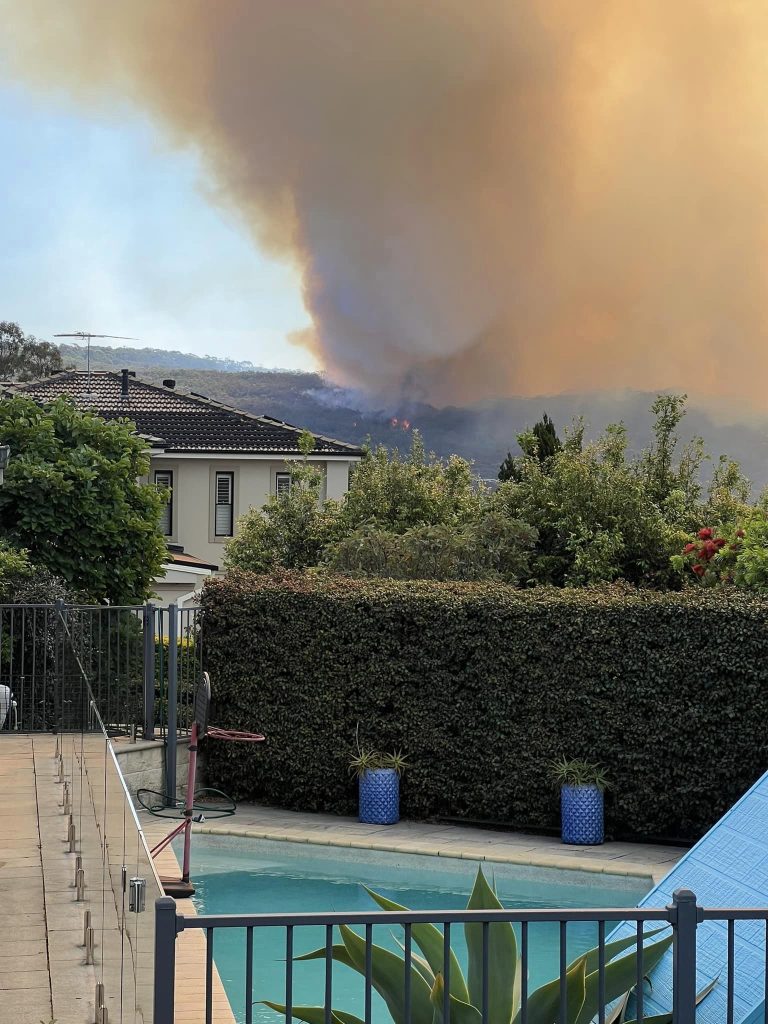
There are four simple steps to get ready for a bush fire:
Step 1: Discuss what to do if a bush fire threatens your home.
Many households find that having a discussion over dinner works best as everybody is together and focused.
Step 2: Prepare your home and get it ready for bush fire season.
There are simple things you can do around your home to prepare it for a bush fire, like keeping the grass low and having a cleared area around your home.
Step 3: Know the bush fire alert levels
If there is a fire in your area you will find its alert level on the NSW RFS website and in the ‘Fires Near Me’ app. You need to keep track of the alert level so you know what you should do.
Step 4: Keep up to date with all bush fire information numbers, websites and apps.
In a bush fire, it’s important that you stay up to date on conditions in your area.
In the event of a fire – what to do if it’s too late to leave
If you cannot leave or you receive an Emergency Alert warning that it is too late to leave, you should take shelter in a room on the opposite side of your house away from the approaching fire. Ensure you have clear access to an exit from this room.
If you are threatened by fire
- If the fire impacts, seek shelter in a solid structure such as a house to protect yourself from the heat of the fire.
- Bring pets indoors and restrain them, close all doors and windows and turn off air conditioners, keep water running if possible.
- Shelter in a room on the other side of the building from the approaching fire, and one that has water and a clear exit out of the house.
- Monitor both inside and outside for small fires and burning embers and turn sprinklers on if you have them.
- Be careful outdoors after the fire has passed as trees can be unstable and fall.
- If your life is at risk, call Triple Zero (000).
Other Information
- Stay up to date on bush fires in your area by checking Hazards Near Me, the RFS website, listening to your local radio station, or by calling the RFS Bush Fire Information Line on 1800 679 737.
- If you have a respiratory condition and may be affected by smoke, activate your health management plan and seek medical advice if necessary. Take precautions, such as staying indoors and closing windows.
- For information on road closures, check Live Traffic NSW.
- Monitor weather conditions and weather warnings at Bureau of Meteorology.
If you and your home are well prepared, you stand a better chance of surviving a bush fire. For more information and resources, head to the RFS website.
Images: all shared in the Northern Beaches Living Facebook group.